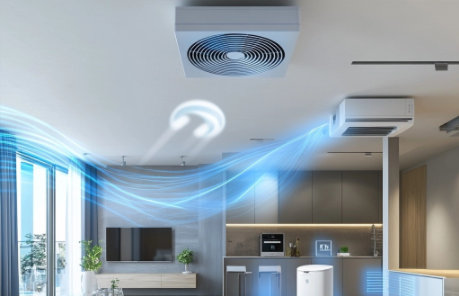
Choosing a suitable air conditioning system requires a comprehensive consideration of the nature of the building, space requirements, energy efficiency requirements and budget. The following are the specific selection strategies we have summarized:
1. Choose based on the nature of the building and the space requirements
Large Spaces or crowded places
Applicable system: All-air constant air volume air conditioning system
Features: It achieves constant temperature and humidity through centralized control and is suitable for places such as shopping malls, theaters, and exhibition halls that require unified environmental control.
Advantages: The system control is simple, highly reliable, has low maintenance costs, and can save energy by utilizing fresh air during transitional seasons.
The demand for zoning control in medium and small-sized buildings or multi-room structures
Applicable system: Multi-split air Conditioning system (VRV)
Features: One outdoor unit can be connected to multiple indoor units, supporting independent temperature control. It is suitable for office buildings, hotels, schools, etc.
Advantages: Flexible installation, energy-saving and highly efficient, with a high energy efficiency ratio during partial load operation.
Buildings with low floor heights or those that require individual adjustment
Applicable system: Fan coil unit plus fresh air system
Features: Each room is independently temperature-controlled, and fresh air is directly delivered into the room. It is suitable for hotel rooms, hospital wards, etc.
Advantages: Space-saving and relatively low cost, but attention should be paid to the issues of condensate water discharge and fan noise.
Buildings with stable residual heat or large inner zones
Applicable system: Water ring heat pump air conditioning system
Features: Transfers the residual heat from the inner area to the outer area through water circulation, suitable for office buildings, commercial buildings, etc.
Advantages: It has a remarkable energy-saving effect and is especially suitable for scenarios with stable heat sources.
Second, choose based on energy efficiency and operating costs
Scenarios that require long-term operation and pursue energy conservation
Recommended system: Inverter central air conditioning or multi-split system
Features: Automatically adjust power according to actual load to avoid frequent starts and stops.
Advantages: High energy efficiency ratio, and long-term use can significantly reduce electricity bills.
Projects with limited budgets or sensitive initial investments
Recommended system: Air-cooled central air conditioning or split air conditioning
Features: Simple installation, low cost, suitable for small commercial buildings or family residences.
Note: Long-term operating costs and initial investment need to be balanced.
Buildings that operate throughout the year and require both cooling and heating simultaneously
Recommended system: Heat recovery unit or water ring heat pump
Features: Recovers heat from exhaust air for heating purposes, suitable for hospitals, hotels, etc.
Advantages: High comprehensive energy efficiency, reducing energy waste.
Iii. Select based on special needs
Places with high requirements for air cleanliness
Recommended system: All-air constant air volume System (with High-efficiency filter)
Features: Ensures air quality through multi-stage filtration, suitable for operating rooms, laboratories, etc.
Note: The filter needs to be replaced regularly, and the maintenance cost is relatively high.
Places sensitive to vibration or noise
Avoid systems: Fan coil units or multi-split systems (indoor unit noise may exceed the standard)
Recommended system: Water-cooled central air conditioning (outdoor units are kept away from buildings)
Features: Smooth operation, low noise, suitable for libraries, recording studios, etc.
Places lacking chemical fuels or requiring environmental protection
Recommended system: Ground source heat pump or water source heat pump
Features: Utilizing underground or surface water sources for cooling/heating, suitable for villas, ecological buildings, etc.
Advantages: Environmentally friendly and pollution-free, but geological conditions need to be evaluated.
Iv. Comprehensive Selection Steps
Clarify the requirements: Determine the building's purpose, area, number of rooms and usage frequency.
Calculate the load: Calculate the cooling and heating loads based on personnel density, equipment heat dissipation, enclosure structure, etc.
System comparison: Compare the initial investment and operating costs of all-air, multi-split, water-cooled and other systems.
Energy efficiency assessment: Prioritize products with a high energy efficiency ratio (EER) or first-class energy efficiency.
Professional consultation: Entrust design institutes or suppliers to conduct load simulation and system optimization.
Installation and Maintenance: Select a qualified installation team and formulate a regular maintenance plan.