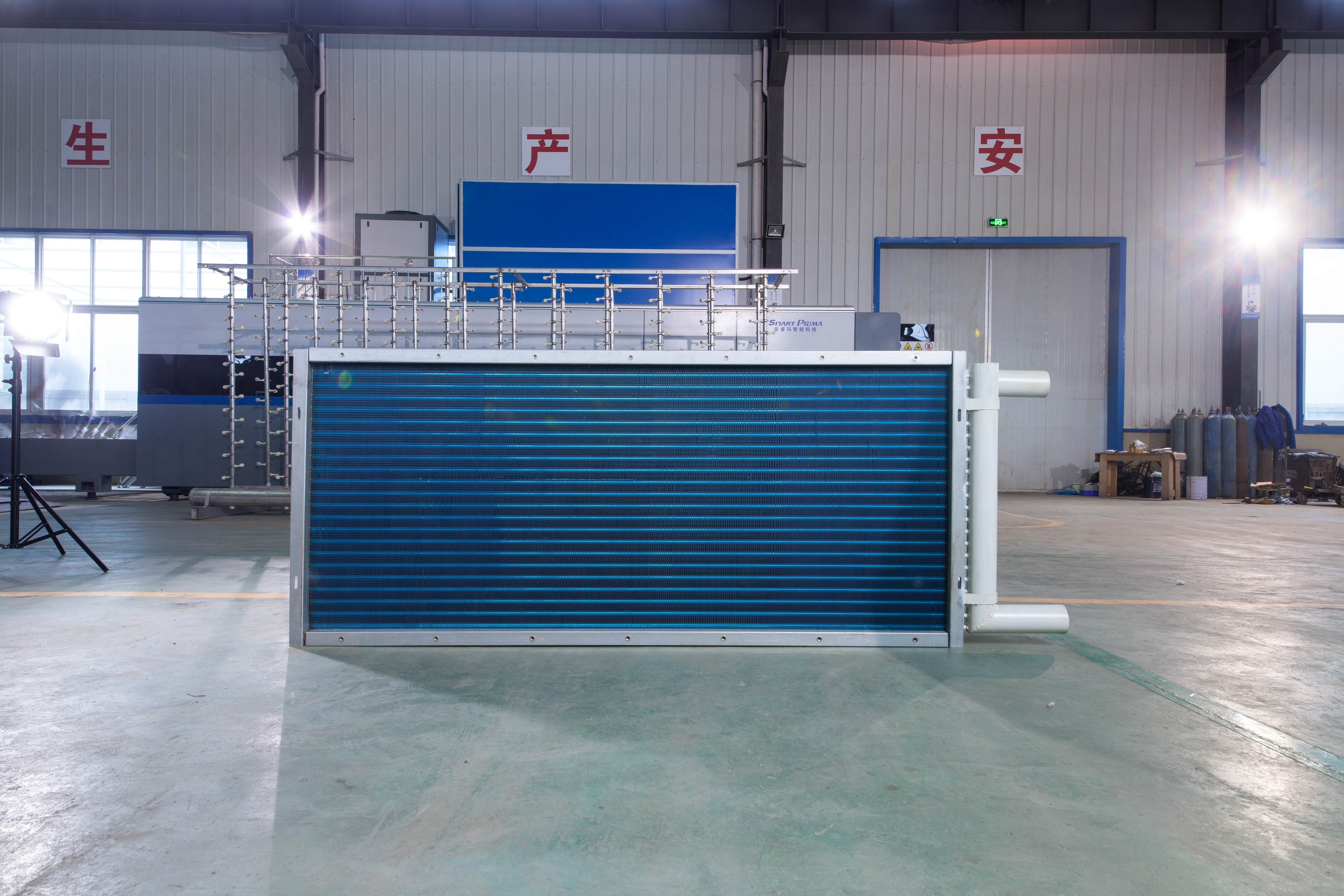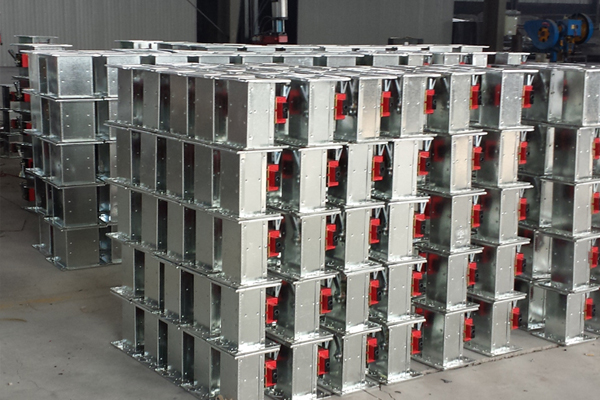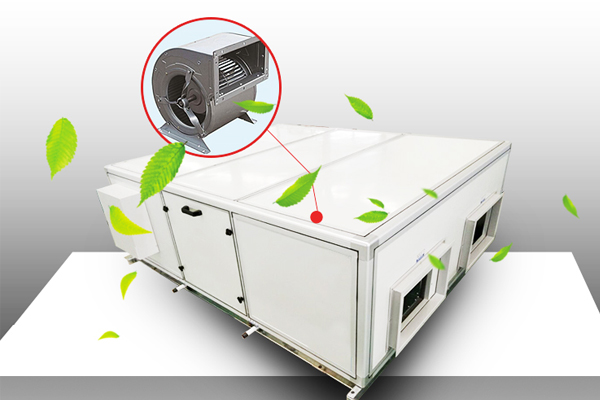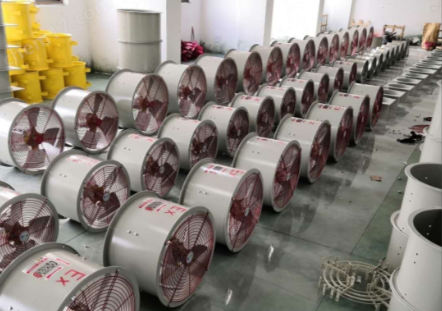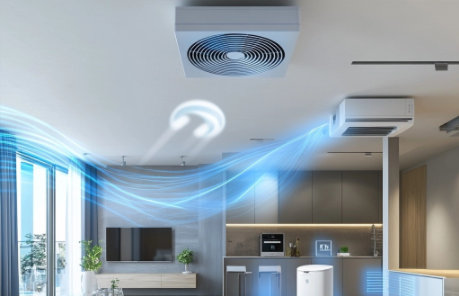
Jet unit is an air treatment device designed based on the principle of jet aerodynamics. It forms a circulation by driving the surrounding air with high-speed airflow and is widely used in industrial, commercial and public building fields. The following is our detailed introduction to it:
I. Core Working Principle
The jet unit uses a fan to generate high-speed airflow, which then sprays the treated air (heated, cooled, humidified or dehumidified) into the room through specially designed jet ports (such as spherical nozzles). High-speed jets have strong momentum and can drive the surrounding air to flow, forming long-distance and large-area air circulation. For example:
Industrial plants: Jet units can spray the treated air to the working area 20 to 30 meters away, eliminating ventilation dead corners and ensuring uniform distribution of temperature and humidity.
Commercial buildings: In shopping malls, jet units can quickly adjust the indoor temperature, keep the air fresh, and enhance the shopping experience for customers.
Ii. Core Components and Technological Innovation
Fan: It adopts aviation-grade aluminum alloy impeller or brushless DC motor to provide stable power. For instance, a certain model of unit can achieve an air supply distance of over 35 meters at a rotational speed of 2800rpm, while the noise level is below 58dB.
Jet port design
360° rotation mechanism: Supports ±15° pitch adjustment, combined with an automatic blade swinging system driven by a servo motor, it can complete 120° horizontal sweeping within 30 seconds, achieving air distribution without dead corners.
Hyperbolic surface deflector plate: Optimizes the airflow direction, with the maximum air supply distance reaching up to 25 meters. The adjustable range of the airflow diffusion Angle is 60°-120°, eliminating temperature stratification.
Intelligent control system
It integrates the Modbus-RTU communication protocol and supports seamless integration with the building automation system.
Stepless speed regulation is achieved through 4-20mA signals or 0-10V voltages, reducing energy consumption by 40% compared to traditional units.
Equipped with a temperature sensor, it can monitor the indoor temperature in real time and automatically adjust the operating parameters.
Iii. Application Scenarios and Advantages
Industrial buildings
Factory workshop: Maintain stable temperature and humidity to prevent electronic components from getting damp or overheating and being damaged.
Warehouse: Control ventilation to reduce the risk of goods getting damp.
Commercial buildings
Shopping malls and supermarkets: Quickly adjust indoor temperature to keep the air fresh.
Hotel: Provide customers with a comfortable environment and enhance the accommodation experience.
Public buildings
Gymnasiums and exhibition halls: Meet the ventilation requirements of large-scale events to ensure the comfort of spectators and athletes.
Library: Maintain a quiet environment while ensuring air quality.
Iv. Comparison with Other Devices
Compared with air conditioning units:
Air circulation mode: Jet units actively drive air flow through high-speed jets, while air conditioning units rely on outlet louvers or diffusers, resulting in a limited air distribution range.
Applicable scenarios: Jet units are suitable for large Spaces (such as factories and stadiums), while air conditioning units are suitable for small Spaces (such as residences and offices).
Energy efficiency: Jet units consume less energy, especially with obvious advantages in large Spaces.
Comparison with high-space heating units:
Design principle: Jet units focus on local air quality control, while high-space heating units achieve heat transfer through forced convection or a combination of radiation and convection.
Applicable scenarios: Jet units are suitable for small Spaces, while heating units for large Spaces are specially designed for exhibition halls, airport waiting halls, etc.
V. Selection and Installation Suggestions
Key points for selection
Select the appropriate model based on the space height, area and air supply distance.
Considering the noise requirements, low-noise designs (such as below 45dB) should be given priority.
Installation precautions
Ensure the insulation quality and prevent the problem of condensate water discharge.
A horizontal or vertical water system is adopted to facilitate the discharge of condensate water.